I had the great pleasure of Interviewing Aabhira Aditiya, a (UX) User Experience, and Interaction Designer in the financial tech industry. Aabhira gave me great information on the importance of UX Design, how to get into the field, and much more.
Aabhira’s Background, and Experience
Aabhira Aditiya is a senior UX designer who currently works for a financial, software, data, and media company headquartered in Manhattan, New York. she completed her bachelor’s in Fashion and Lifestyle accessories at NIFT (National Institue of Fashion Technology) in New Delhi, India. In her interview, she explains that getting a UX job can be different for everyone.
After completing her bachelor’s, Aabhira got into industrial physical product design. During this time she worked in India for a couple of years. She explained that you always do research, concept design, user testing, and any kind of user validation for design methodology. After Aabhira had worked as a product designer for a few years, she went on to do her master’s in New York at Parsons School of Design. She got her master’s in Transdisciplinary Design. She explains that this wasn’t specific to User Experience Design but a discipline of all types of designs. Aabhira explained that some of her projects related to the general focus of companies, strategies, and system design. So most of her projects focused specifically on digital products.
From that point on, Aabhira become interested in the digital space of technology and User Experience Design! While at Parsons she did a lot of application designs. During her time at Parsons, Aabhira had done a summer internship at Voxy which uses AI to help users learn English. Since Aabhira was the design intern at Voxy, she was designing their web and mobile applications. This internship helped her excel, and obtain more experience in User Experience Design. After graduating from Parsons School of Design, she noticed a big boom in the industry even now more than ever with Covid-19. After graduation, she worked at a few companies such as start-ups and some digital agencies. After one year from graduating and working for different companies, Aabhira got the opportunity to work for a fintech company headquartered in Manhattan, New York City.
How Aabhira got into UX
After conversating with Aabhira for a bit, I asked her how she got into User Experience Desing. She had told me that, she “really enjoys designing products and applications that people will use”. What also drove her towards UX is being able to see the product “especially when the product is shipped, and then you get to see the users using it”. Aabhira then explained to me what the day-to-day tasks are for a UX designer. This depends on the designer and the company, as for Aabhira, she works very closely with different stakeholders, businesses, and product owners. Another team she works closely with is the Engineers since they are the ones who are contributing greatly in making the product come to life. It was very interesting to know how UX Designers work. Understanding their roles, and who they work with to make the product come alive such as, the Engineers and other designers were enthralling. Aabhira went on to explain to me that at her work she plays a big role in the interaction design part. Some of her coworkers include people with similar backgrounds. Since it can take a whole department to make a product, she must interact with all the other designers. For example, a company would have people in User Experience research, visual designers, data scientists, and documentation people. While being a UX Designer, Aabhira also conducts her own User Research when designing for products. So she will conduct her own User Research when designing for products. So overall, as a UX designer Aabhira will be in meetings with product owners, engineers, and other business persons.
How projects are conducted
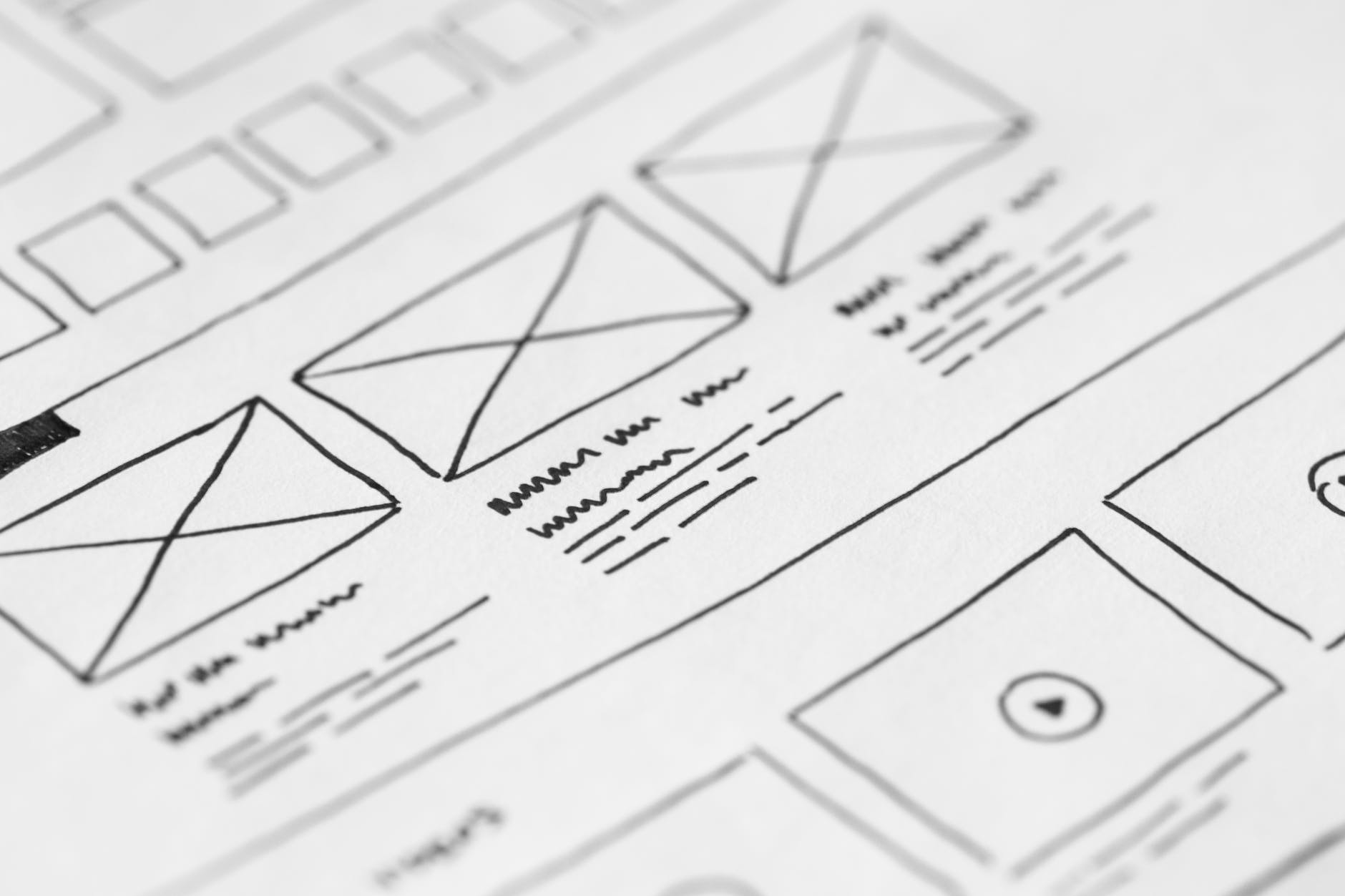
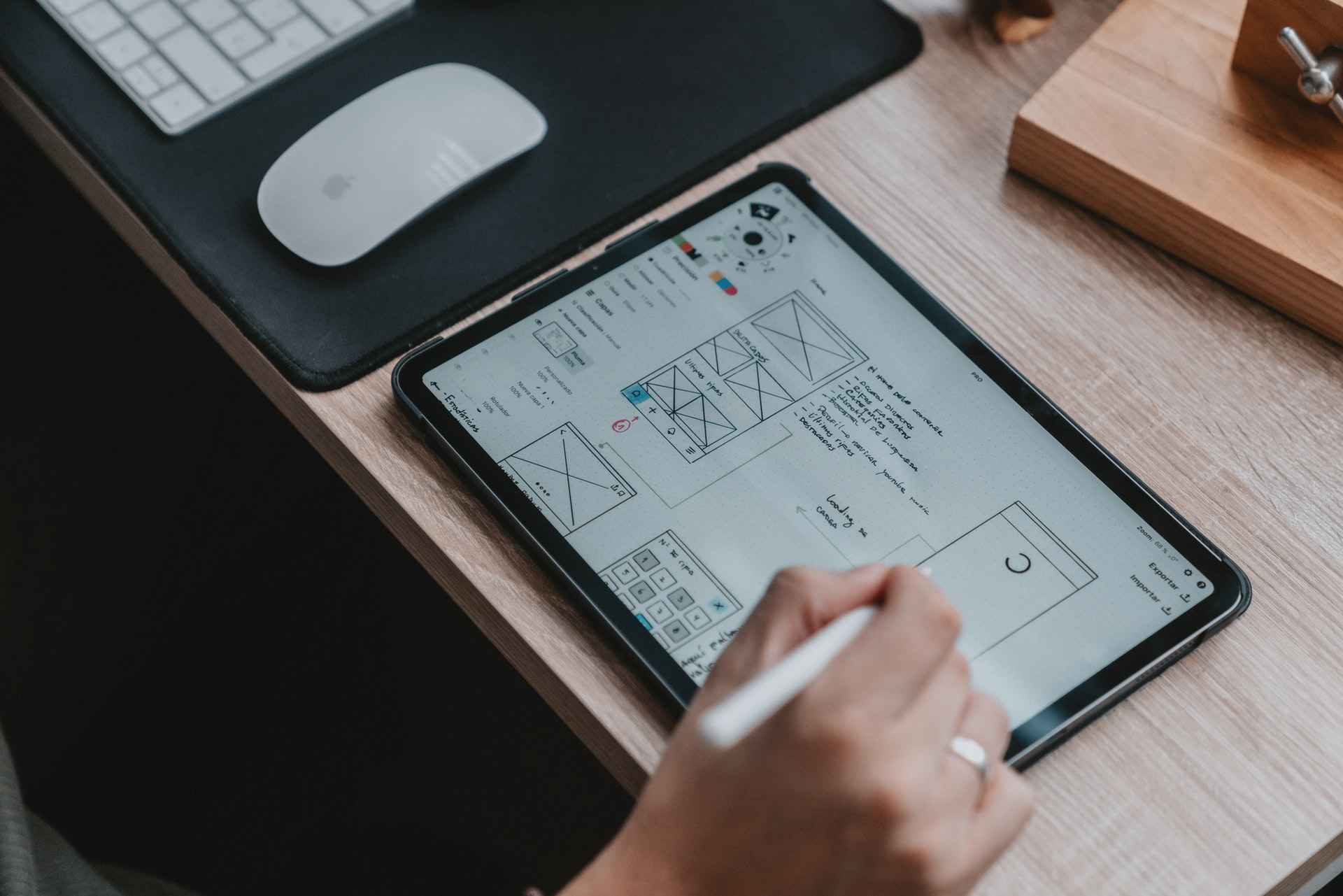
Another interesting thing I got to learn is how projects are conducted. Aabhira explained that, when designing a product, they must understand what and why they’re designing, and what are the business goals. Furthermore, why they are designing the product and what are the user’s needs. User Research is another very important thing when designing a product. It can be from the companies databases or obtaining it from other outside sources. I also think that obtaining research for the product is a big thing since that shows why you are designing the product in the first place. As a User Experience Designer, you also must create wireframes. Aabhira states, that these can start off as low fidelity then to high fidelity mockups. Which then you would run usability tests once the team agrees on the prototype. For Aabhira most of her time as a User Experience Designer is spent doing wireframing and showing a step-by-step user flows.
UX Designers and their Flexible Work Environments
Since the pandemic, a lot of people are working from home but eventually, once things start to settle down we will be able to go back to the office. Aabhira states that there are some people who enjoy working from home and then others who want to go back to the actual work environment. It’s also important to have a balance of the two. So you get a face-to-face interaction.
Tools a UX Designer Uses
Aabhira says she uses Sketch and Invision. What she likes to do is either sketch the prototype first and then upload it to Invision to use the linking tools. Which will make it more realistic. A few other designing tools she used are, Omnigraffle, Accenture, and Balsamic. Primarily she uses Sketch and Invision as mentioned above. Aabhira also uses adobe products, since it is important for a User Experience to know how to use industry-standard design tools.
Key Detail for Product Design
Aabhira says the important thing to work on and understand is that you’re creating for the user. So making sure the Product is providing a solution for the user and is meeting the business goals. Another goal is to make sure the designs are validated. Aabhira explains that as User Experience Designers we make assumptions for the users but we can’t know exactly how they will react. User Testing is important in that aspect. Data is also very important to look into since it provides information for the product. Overall, Aabhira states for a product to be well designed, she needs to have a great experience and if the product accomplishes that then “it’s a good design”. Another thing is simplicity and ease of use such as getting a task done with ease. This makes for a well-designed app.
The reason for becoming a UX designer
Aabhira explains that, if you are someone who enjoys design and technology then it can be a great field for you. Another thing is, If you enjoy working with people in similar fields as you and like to work collaboratively, then User Experience can be a great field for someone. It’s also a highly demanding job!
How to get into a UX Design Job
It’s great to do a program in relation to the subject. Aabhira explains if someone wants to get into it then they can do programs such as Human-Computer Interaction (HCI), Parsons Design & Tech programs, UX Bootcamp like General Assembly, or Nielson Norman classes. With these, you can earn certifications, which can help you excel. Self-learning wireframing and prototyping is also a great way to gain knowledge and experience in UX.
Overall, It was a pleasure talking with Aabhira a Senior User Experience and Interaction Designer. She has a tremendous amount of knowledge about the field and understands what makes a great product! She is well certified and qualified in the field of UX. She is talented, determined, and very intuitive.